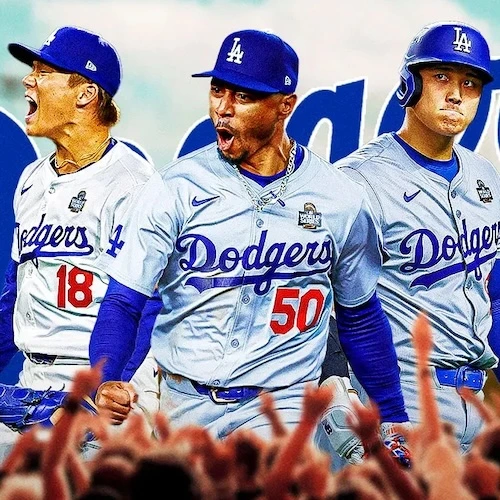


After their massive 2024 spending spree led to a 2024 World Series win, the Dodgers are back. Here’s why their strategy of ignoring critics and investing in quality is a lesson for every business.
The World Series starts tomorrow, and for the second year in a row, the Los Angeles Dodgers are here. Their sustained dominance is not luck. It is the definitive vindication of a brilliant, courageous business strategy—and a powerful lesson in ignoring the noise.
To understand why, we must rewind to the 2023-24 offseason.
The public criticism was deafening. The Dodgers shocked the world by signing MVP Shohei Ohtani and Japanese ace Yoshinobu Yamamoto, and trading for Tyler Glasnow. They added this massive firepower to a core that already included superstars like MVPs Mookie Betts, Freddie Freeman, and All-Star catcher Will Smith.
They were instantly labeled “villains,” accused of “buying a championship.” In July 2024, they made the ultimate power move: they traded for Blake Snell, absorbing their rival’s prized asset.
The noise from critics was overwhelming. Then, in October 2024, the strategy was vindicated: the Dodgers won the World Series.

Now, one year later, they are back, proving it wasn’t a fluke. It was the successful implementation of a long-term dynasty model.
The Dodgers’ leadership understood something their critics failed to see: Smart, relentless investment in QUALITY is the single greatest driver of revenue.
Most owners protect their profit percentage. The Dodgers focus on net profit in dollars.
They willingly sacrifice a short-term profit percentage to invest in a superior product (the best talent). That product—a team packed with global stars—generates exponentially higher revenue:
- Sold-out stadiums (at home and on the road).
- Record-breaking merchandise sales (Ohtani’s jersey).
- Massive, lucrative television and media deals.
After all, according to 2024 revenue data from Forbes, a 30% margin on the Dodgers’ $581 million in revenue (which equals $174.3M in profit) is radically more money than a 35% margin on a rival’s $421 million (which equals $147.3M in profit).
Being “financially intelligent” isn’t just “spending less.” It’s having the courage to make the right investments, endure the public criticism (“el qué dirán”), and trust your system. The Dodgers proved that the most profitable strategy of all is building a dynasty.